
Nesting Success Despite Spring Tide Chaos!
The 2026 nesting season has been a very busy time for the Space for Shorebirds team! Ringed plover and oystercatcher once again returned to nest on sandy and shingle beaches along the coast and we were on hand to protect them.
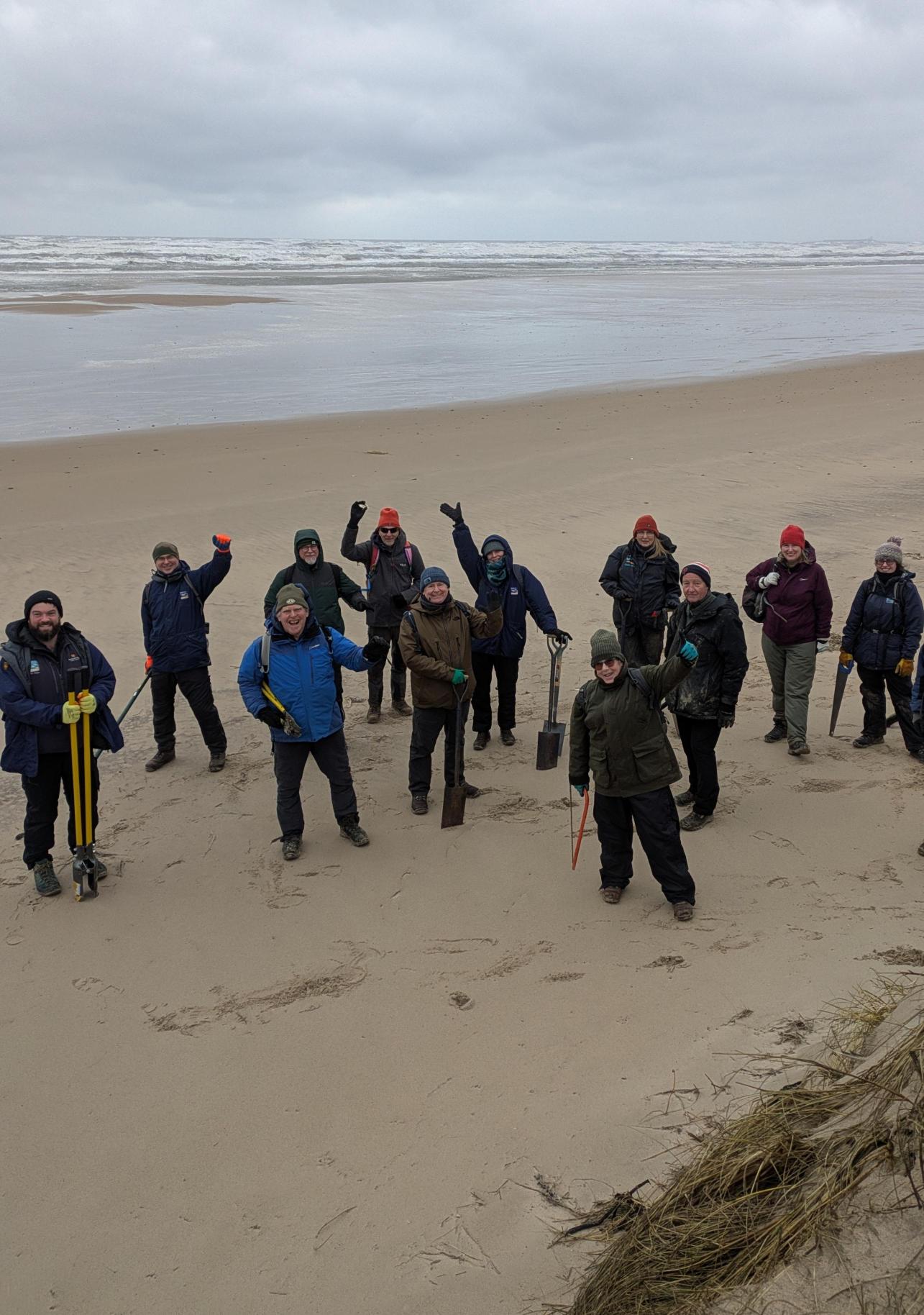
A huge amount of work goes into protecting ground nesting birds on the coast, and we couldn’t do it without the help from dedicated Northumberland Coast Conservation Team volunteers. Their hard work and dedication plays a huge role in the success of each nesting season. Just a few of the tasks they get involved with include:
- Practical habitat management of nesting sites
- Surveying the coast to look for nesting birds
- ‘Chick Watch’ – monitoring shorebird chicks and talking to beach users
- Reviewing hundreds of hours of footage from our remote nest cameras
- Maintaining and repairing nest cages and fences
This season presented many challenges, the biggest by far for us being high spring tides washing away nests. In May, June and July, the highest of the spring tides coincided with a strong north easterly wind which pushed the height of the tide up even further. 15 ringed plover nests were lost to the tide, making up over 50% of all nesting attempts. For comparison, only 1 nest was last to tides last year.
However, despite the challenges, 6 juveniles fledged successfully from sites at Buston Links and Lynemouth Bay, 3 of which were ringed as part of our colour ringing project so we can track where they go once they leave their nesting site.
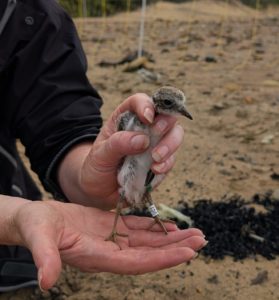
Ringed plover chick ‘UCT’ ringed at 17 days old at Lynemouth Bay
Another huge success from this year has been our remote camera project – deploying trail cameras on nests along the coast to monitor their progress and capture any predators taking eggs and chicks. Over 9000 hours of footage was recorded this year, with Conservation Team volunteers reviewing 5423 video files and recording what they see. It is essential for us to know which predators are present as this helps us assess how best to protect the nests.
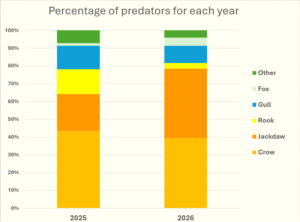
Data from the 2026 project showing the number of predators captures on camera
The results from this study show that corvids remain the main predator of ringed plover eggs and chicks, but this year the number of jackdaws picked up on our cameras has increased significantly. Thankfully footage shows that nest cages were successful in preventing them from taking eggs, and so we will continue to use them at certain sites next year. More information about our remote camera project can be found here – Plovers, Camera, Action!
Our remote cameras also give us a unique insight into the nesting behaviour of the nesting birds – including capturing footage of chicks as they take their first shaky steps out of their nests at just a few hours old! Click here to see a story of 3 adorable oystercatcher chicks exploring their surroundings.
Nest protection really is a huge team effort, and without the combined efforts from ourselves, volunteers, landowner support and beach users giving the birds space, ringed plovers would not be able to nest successfully on Northumberland’s busy beaches. Every season is different and presents a new set of challenges, but we are always learning and we will be back again next spring to give these precious birds a fighting chance at having a successful nesting season!