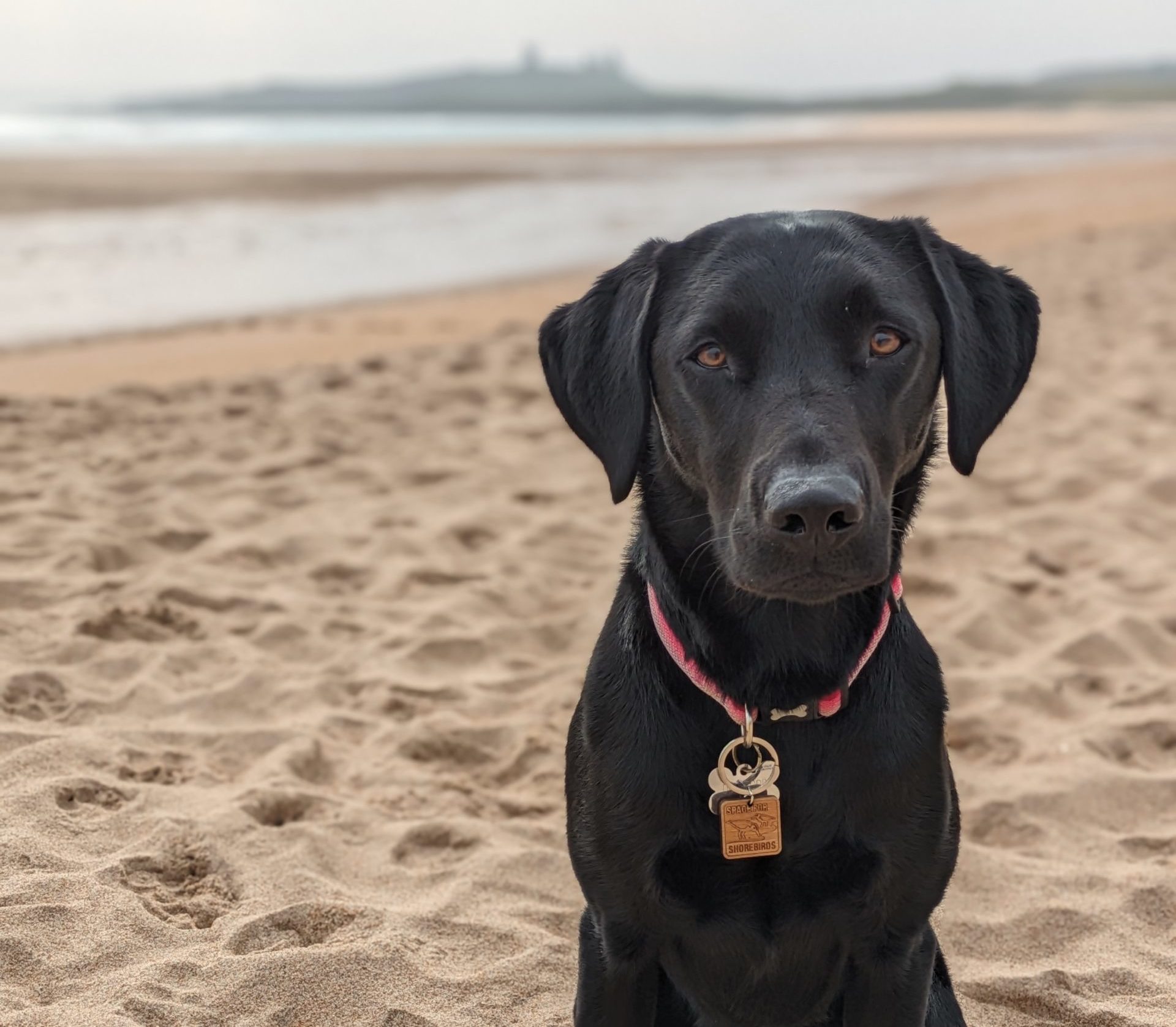

Dog Rangers Assemble!
This is me and my best friend Ida – my little adventure buddy! Together, we have explored most of the Northumberland coast and beyond, and I can’t imagine setting off on a long walk without her. One of the best parts of my job is meeting so many lovely people and dogs, and hearing all about their own adventures with their four-legged friends.
Ranger Katherine and her pup Ida
The Northumberland coast is a fantastic place for a dog walk as there is so much fun to be had! Long stretches of sandy beach for a good run around, each high tide bringing in new sniffs and, of course, a splash in the sea to cool off on a hot day.
Ida is truly at her happiest when we go to the beach, her nose is down, in search along the strand line for a stick so I can throw it in the sea for her to retrieve. Open stretches of long sandy beach, such as Druridge Bay, Blyth and Spittal are my go-to places when Ida needs a good run around. Sandy habitats don’t really support shorebirds as there is less food for them to eat, so there is less chance we will encounter and therefore disturb them – but we’re always on the look out just in case!
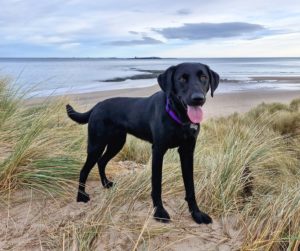
Ida on top of a sand dune at Bamburgh beach
This changes for beaches such as Boulmer, East Sea Sands at Newbiggin and Beadnell Haven, where the habitat is more muddy and rocky. Places like these are real hotspots for shorebird activity due to the huge diversity of marine life living within the sediment and in the rock pools. When visiting places like this with Ida I make sure we keep high up the beach and she is never far from my side – this isn’t the place for chasing sticks in the sea!
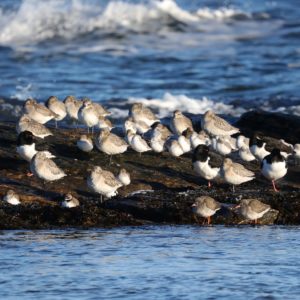
A group of roosting shorebirds at Beadnell Haven beach
Being a birder, I always carry my binoculars with me as there is so much wildlife to see no matter the season or the time of day. Ida has grown used to me stopping regularly to look at the birds during our walks, and is quite happy to trot along beside me, sometimes on a lead in the more sensitive parts of the coast.
Over the last 5 years, we have been carrying out surveys along the coast to monitor shorebird disturbance, looking into how people are using the coast and which locations are most heavily disturbed. It’s no surprise that within the 400 hours of survey time the top activities we have recorded are dog walking, walking, bird watching and exploring the shore (e.g. rockpooling or sea glass collecting). These activities have accounted for shorebirds being disturbed 3,599 times, with dog walking on and off lead making up 58% of these events. Boulmer and Newbiggin are the two sites where disturbance is highest, which is unsurprising given that the muddy and rocky habitats here support a huge number of shorebirds.
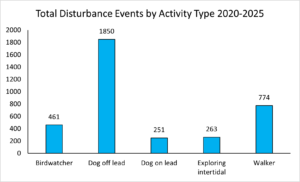
We class disturbance as anything which causes a bird to alter its normal behaviour – for example, someone walking too close to a feeding bird which causes the bird to stop feeding or fly away. Most of the time, when we see dogs causing disturbance, they aren’t actually chasing the birds, they’re just using the same parts of the shore. Shorebirds are most likely to be feeding along the edge of the water – right where dogs like to splash about in the sea! Sometimes we see dogs chasing a ball – which is great as they aren’t chasing the birds – but the ball is being unintentionally thrown towards the feeding birds.
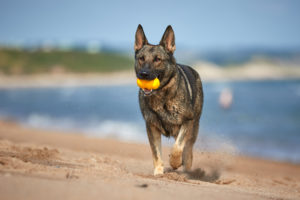
Dog Ranger Roxy
However dogs do occasionally chase the birds too. I am lucky that Ida has never shown any interest in chasing wildlife, she is much more focused on sniffing and retrieving, and we quite often take a ball or frisbee with us to keep her entertained. Chasing wildlife, especially birds, is something that can be instinctive for many dogs, but this behaviour is not acceptable in Northumberland. It is extremely stressful and life threatening for the birds, and very dangerous for the dogs too, as running over slippery rocks and mud can lead to injury.
Disturbance to shorebirds is unfortunately contributing to population declines. Each time a bird is pushed away from its feeding or roosting spots, it is using energy which it desperately needs to keep warm, fit and healthy through the winter, and make the long migration back to its breeding grounds in the spring. With so many of us heading to the coast with our dogs, the birds are relying on us to give them a helping hand to survive. And the good news is there are very easy things we can all do to help!
Being aware of which places along the coast you are more likely to encounter shorebirds is a great first step when planning your dog walks. Our guidance is to stick to sand – whether that’s heading to a sandy beach rather than a muddy bay if your dog needs a good run, or sticking as high up the beach as possible when visiting places like Boulmer and Newbiggin to give the birds lots of space.
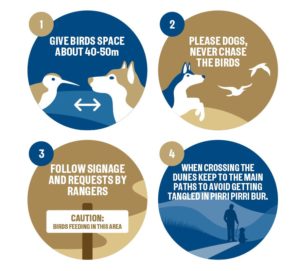
Our guidance when taking your dog to the coast
Ida is a member of the Dog Ranger team, a dedicated squad of nature-loving dogs and their owners who have taken the pledge to always protect wildlife when on their walks. We are fast approaching 200 members, so if you would like to join the team and feature on our social media, please get in touch!
More information from myself and Ida about dog walking on the coast and what wildlife to be aware of throughout the year can be found on the Berwickshire and Northumberland Marine Nature partnership YouTube page – https://www.youtube.com/watch?v=JY4Tt9iAR60
A flock of golden plover feeding on the mud on the Coquet Estuary