Learning to Read the Northumberland Coast: A Season with Space for Shorebirds
Gabriela Antunes, work experience student, shares her perspective on the Northumberland Coast.
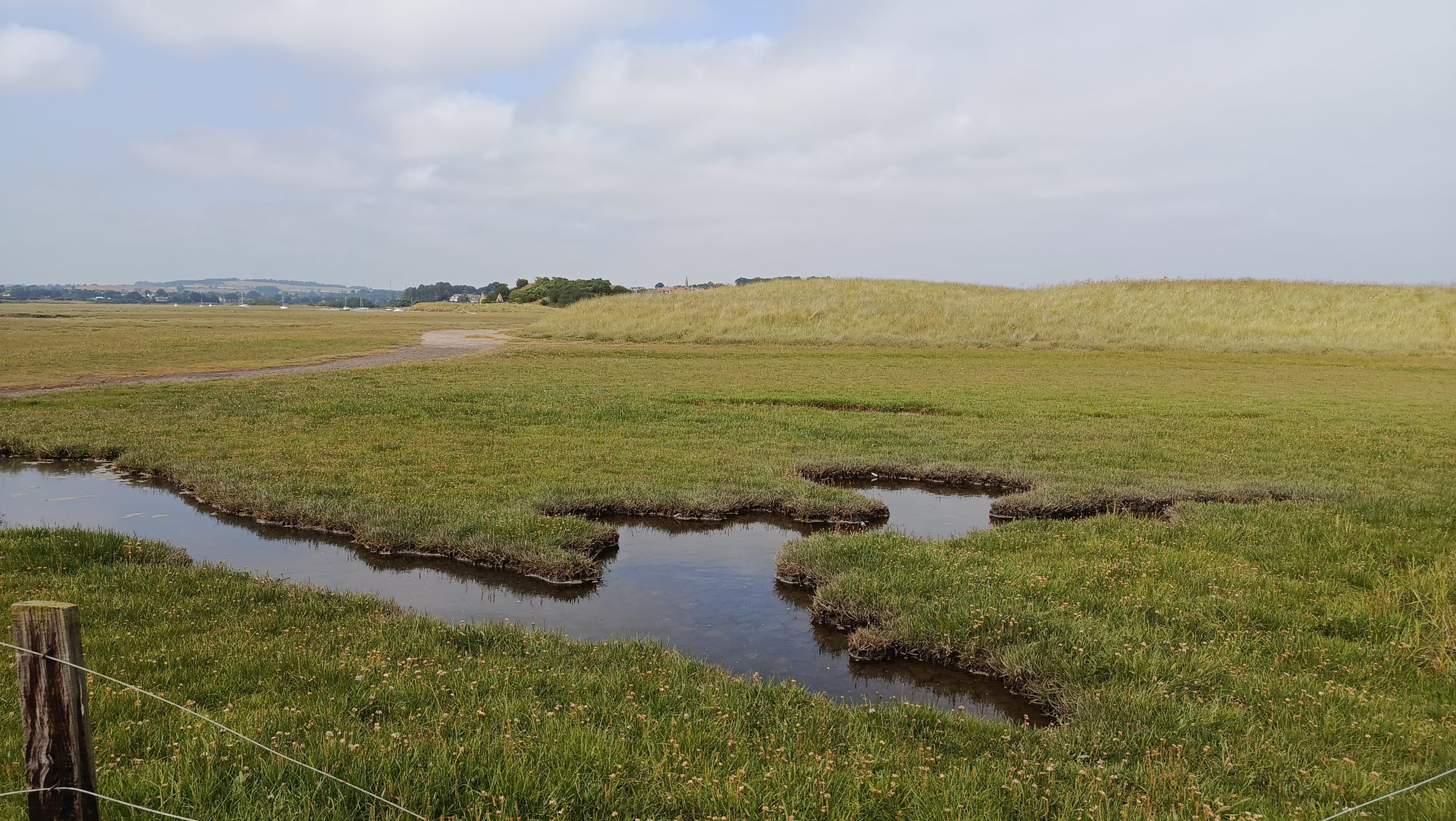
On my first field day with Space for Shorebirds, I learnt that the landscape we were crossing was called a salt marsh—not, as I initially understood it, a “salt mush”.
I wrote the new term in the notebook I had brought with me. That day, at Buston Links with Wildlife Ranger Ben, I also began learning how to recognise the alarm calls of ringed plovers, identify dummy scrapes, install a trail camera and record nest locations on a map. It was the beginning of an entirely new way of seeing the coast.
I am a Portuguese Architecture student from the Faculty of Architecture at the University of Lisbon, and I spent this academic year studying at Newcastle University. My interests increasingly centre on landscape, environmental planning and the relationships between people and the environments they inhabit. Although I was born in a small coastal town and studied sciences before entering architecture, I knew surprisingly little about shorebirds before beginning my work experience with Space for Shorebirds.
Joining the Wildlife Rangers gave me the opportunity to understand conservation not only through policies, maps or design proposals, but through the physical and social realities of caring for a landscape.
Following a nesting season
Because I began the placement in April, I was fortunate enough to witness the different stages of the shorebird nesting season, particularly for ringed plovers.
During my first nest checks, I was amazed by how effectively their eggs disappeared among the sand, stones and shells. Even when I knew approximately where to look, it could take time to see them. Their camouflage is remarkable, but it also makes the nests incredibly vulnerable to people and dogs passing through without ever realising they are there.
Later in the season, nest monitoring gradually became chick watch. Ringed plover chicks are just as difficult to find. Among pieces of driftwood, pebbles, vegetation and sand, they can become almost invisible – and then suddenly reappear somewhere completely different because they can walk very fast!
Following the birds across the season also meant experiencing both the joyful and difficult parts of conservation. After the time and care invested in monitoring nests and protecting nesting areas, learning that some eggs or birds had not survived because of weather or predation could be genuinely emotional. It made me appreciate both the vulnerability and resilience of the birds, as well as the dedication required from the people working to protect them.
Whatever the coastal weather brings
Wildlife Ranger work is much more physically demanding — and unpredictable — than I had imagined.
A typical day could begin by assessing the weather conditions before travelling to the coast in the project van. We would then conduct surveillance walks, check nesting areas, monitor nests or chicks, maintain protective fencing and respond to reports from volunteers and local residents. On some site-checking days, we could easily walk 15 kilometres — more than nine miles.
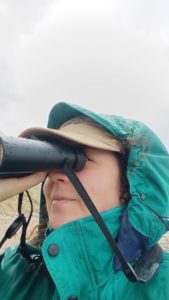
The Northumberland coast is not forgiving when it comes to weather. Even though my placement took place during spring and summer, I worked through sunshine, strong winds, heavy rain and hail.
The hardest day was near Seahouses, where a newly discovered nest needed protection. We had to install fencing and speak to visitors, asking them to give the area space and keep their dogs away, all during a hailstorm. By the end, I was drenched and could no longer feel my hands. However, leaving the site knowing that the nest was better protected made the difficult conditions feel worthwhile.
The work could also be surprising. On one occasion, we received a call from a local resident reporting that a sheep was trapped in an electric fence. We rushed to the location and were relieved to discover that the fence was not electrified at the time. The sheep was simply wandering around inside the enclosed area. Convincing it to leave, however, became an entirely different challenge — and a three-person operation!
A coastline of many landscapes
Through the placement, I experienced an extraordinary range of places: Lynemouth and its heavily post-industrial landscape; Buston Links; Alnmouth and Amble; Embleton; Dunstanburgh Castle; Beadnell; Seahouses; and the coastline stretching towards Bamburgh and the Farne Islands.
Each location had its own geography, habitats, communities and conservation challenges. Walking towards Dunstanburgh Castle during one of our wildlife activities was particularly memorable. The beauty and scale of that landscape impressed me deeply.
I do not think I could have come to know the Northumberland coast as intimately in such a short period through any other experience. I learnt about its natural history and geography, but also about the local residents, visitors, volunteers and professionals who care for it.
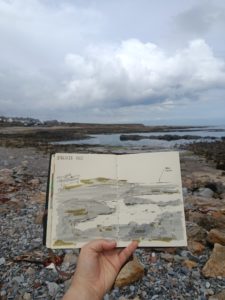
My notebook continued to fill with observations, drawings and new names. Ringed plovers were naturally central to the experience, but I also learnt to identify oystercatchers, Arctic and little terns, eider ducks, kittiwakes, black-headed gulls, razorbills, herons, sanderlings and many others. I also kept asking questions about the coast’s wildflowers and geographical features.
Some species quickly became favourites. I love the oystercatcher’s wonderfully distinctive long, bright bill, as well as the dark hoods of black-headed gulls during the breeding season. Seeing Arctic and little terns — particularly around the Long Nanny site — was another highlight.
Conservation is also about people
One of the most important things I learnt was that protecting shorebirds is not only about understanding birds. It also requires an ability to communicate with people.
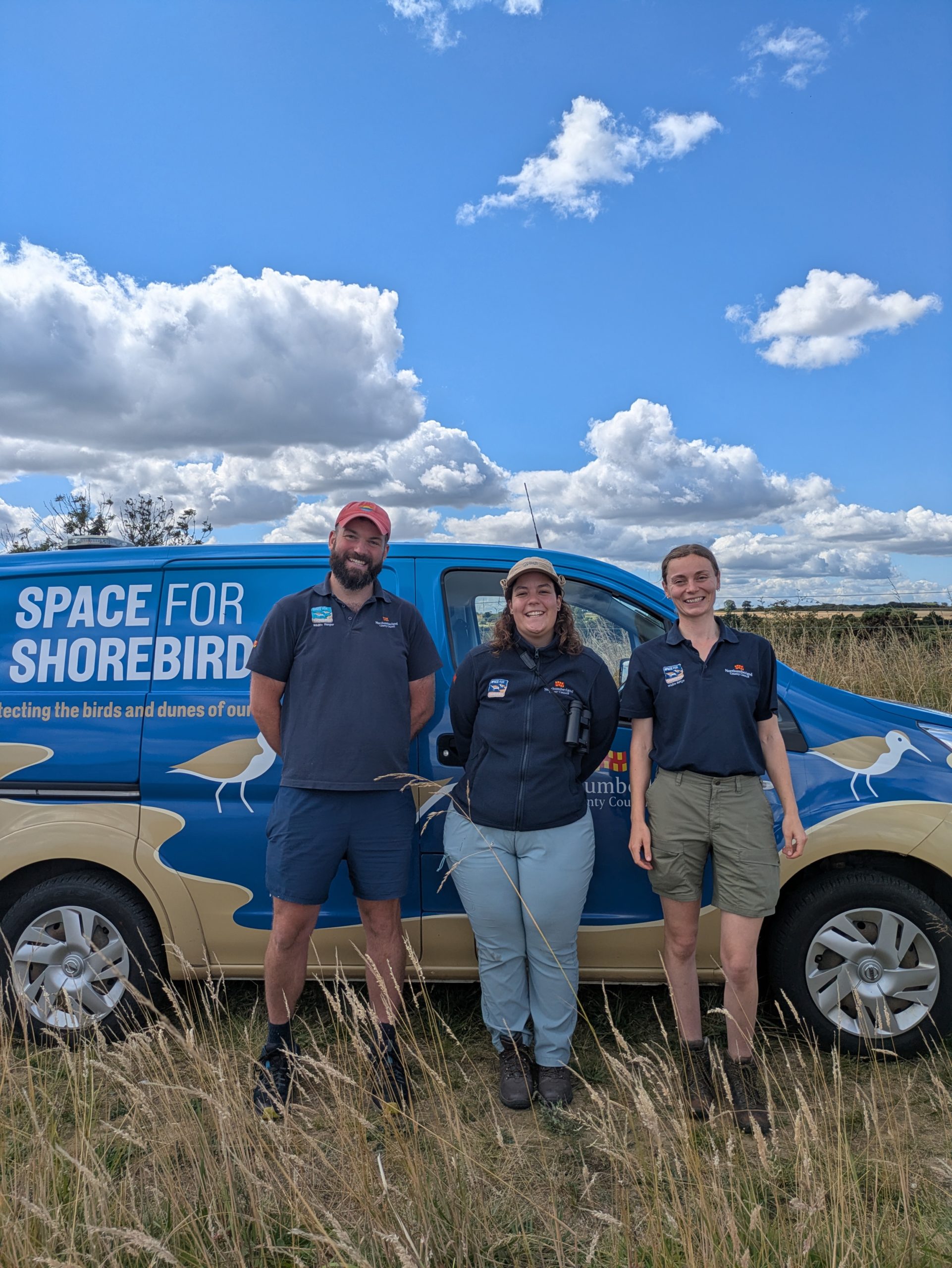
I shadowed Tara, Katherine and Ben as they monitored sites, responded to calls, met volunteers and spoke with people using the coast. I saw how a friendly and engaging conversation could help visitors understand why birds needed more space. Many people listened carefully to the team’s advice and changed their behaviour to reduce disturbance.
I was particularly impressed by the Wildlife Rangers’ ability to capture people’s attention and communicate complex ecological information accessibly. Tara’s work with schools was especially inspiring. During wildlife walks and educational activities, including one near Dunstanburgh Castle, children learnt not only how to behave responsibly on the coast but also how extensive and interconnected its wildlife and conservation work really is.
Tara, Katherine and Ben are incredibly hardworking and knowledgeable about marine biology and the Northumberland coast. Their knowledge is matched by their ability to share it with enthusiasm and care. I am incredibly proud to have met them, learnt from them and shared this season with them.
Taking this experience beyond the coast
As an architecture student interested in landscape and environmental planning, this placement changed how I think about the implementation of environmental policy.
Policies concerning conservation and access may appear clear when viewed in a document or on a map. On the ground, however, they depend on changing tides, severe weather, nesting birds, protective fences, volunteers, visitors, dogs and conversations with local communities. They require continuous observation, adaptation and cooperation.
The experience made me think more seriously about environmental policy and about how people access and understand coastal landscapes and green spaces. It has also shown me that caring for a landscape involves much more than designing it. It means listening to those who know it, understanding how humans and other species inhabit it, and returning day after day to observe, communicate and respond.
I began this placement knowing very little about shorebirds. I will leave Northumberland able to notice alarm calls, tiny movements between pebbles and the possibility of a nest hidden in plain sight. Most importantly, I will leave with a much deeper understanding of the coast—and of the remarkable birds and people who care for it.